

Anthropic CEO Dario Amodei urged G7 leaders in Evian not to allow approaches to artificial intelligence to splinter, according to the Financial Times. The report framed the remarks as a call for coordination among democratic countries on access to frontier models, model evaluation and risk reduction.
The issue became more prominent after a dispute over foreign access to Anthropic’s newest models. In that context, the appeal for a coordinated policy appears to be part of a wider debate over who should be allowed to use the most powerful AI systems and under what conditions.
What was discussed at G7
According to the Associated Press, leaders and major AI executives discussed the future of artificial intelligence on June 17, 2026, at the G7 summit in Evian-les-Bains. Participants named in the report included OpenAI CEO Sam Altman, Google DeepMind CEO Demis Hassabis and Anthropic CEO Dario Amodei.
AP also reported that French President Emmanuel Macron called for cooperation among democratic countries on regulating advanced AI systems. He said the need for regulation had become imperative as political and business leaders could no longer ignore AI’s impact on societies and democratic institutions.
The official list of summit statements published by the European Council says G7 topics included economic stability, growth and emerging technologies. However, the public G7 Leaders’ Joint Statements page does not list a separate declaration specifically devoted to the dispute around Anthropic’s models.
Why Anthropic became a focus
Reuters reported that G7 leaders discussed a possible “trusted partners” scheme for access to advanced models developed by U.S. AI companies, including Anthropic. Citing diplomatic sources, the agency said such a scheme could potentially broaden access for allies while keeping national-security-related restrictions in place.
Days earlier, Anthropic published a statement on a U.S. government directive. The company said it had been ordered to suspend access by foreign nationals to Fable 5 and Mythos 5. Anthropic said it was complying with the legal directive, while disagreeing that the potential vulnerability described should justify effectively recalling a commercial model.
The company also said access to its other models should not be affected. At the same time, its statement acknowledged that cybersecurity around the most capable AI systems remains sensitive and argued for procedures that it described as transparent, fair and grounded in technical facts.
A signal for the AI market
Business Insider, citing Politico reporting, wrote that European representatives had spoken ahead of the meeting about rebuilding confidence and creating a “circle of trust” around frontier models. The article also said the leaders-and-CEO meeting was formally focused on AI’s role in economic growth and societal resilience, while the Anthropic access dispute remained an important backdrop.
For the AI industry, the discussion may become an important indicator of future policy. If G7 countries move toward shared procedures for evaluation and access, companies and public-sector customers may get clearer rules. If approaches diverge, developers and users could face different access regimes, different safety requirements and a more complex international infrastructure.
What remains unclear
It remains unclear whether the “trusted partners” idea will become a formal agreement, a set of recommendations or a series of working consultations. The technical criteria by which countries, companies or organizations could gain access to the most powerful models have also not been disclosed. It is also unclear how national-security interests, AI companies’ commercial plans and U.S. allies’ demand for technology access will be balanced.
Based on the FT, Reuters and AP reports and Anthropic’s statement, the current moment looks more like the beginning of complex negotiations than a finished international regulatory regime. For countries developing their own digital strategies, including Kazakhstan, the debate is a signal that access to advanced AI systems may increasingly depend not only on the market, but also on security policy, trust and international agreements.
Sources: Financial Times, Associated Press, Reuters, Anthropic, Business Insider / Politico, European Council.
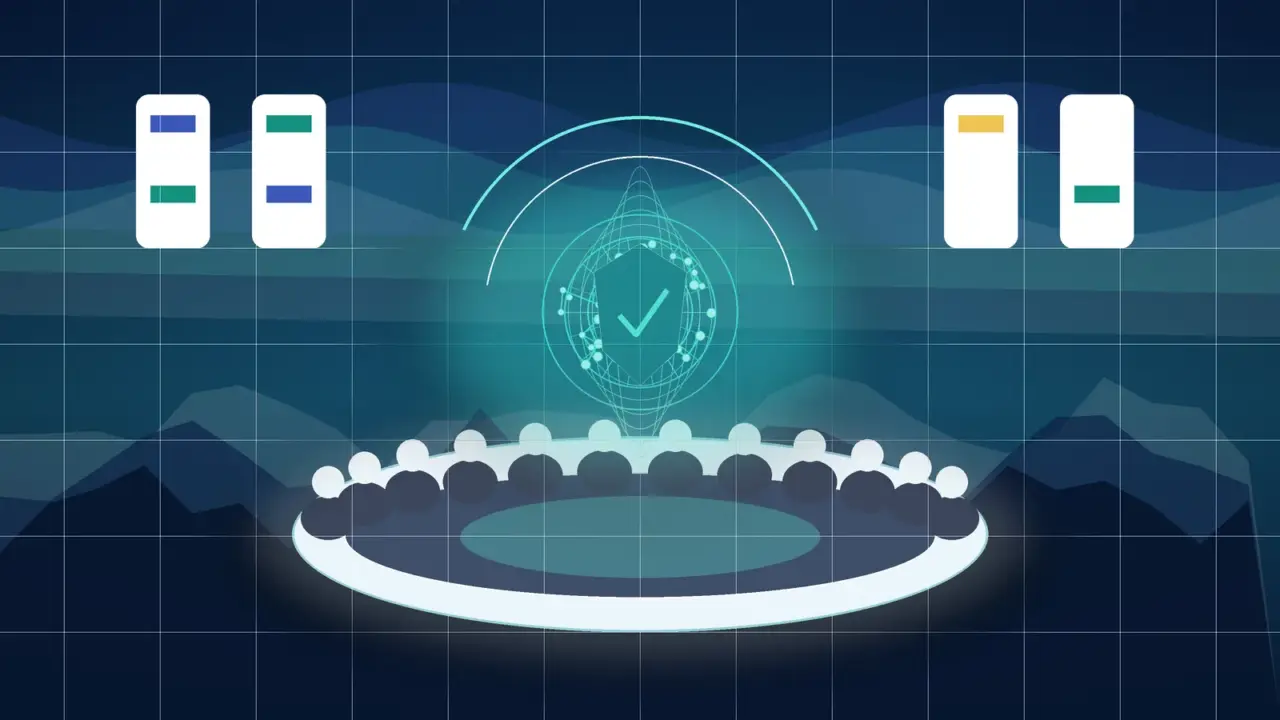
Image generated with artificial intelligence.
Comments on this article