


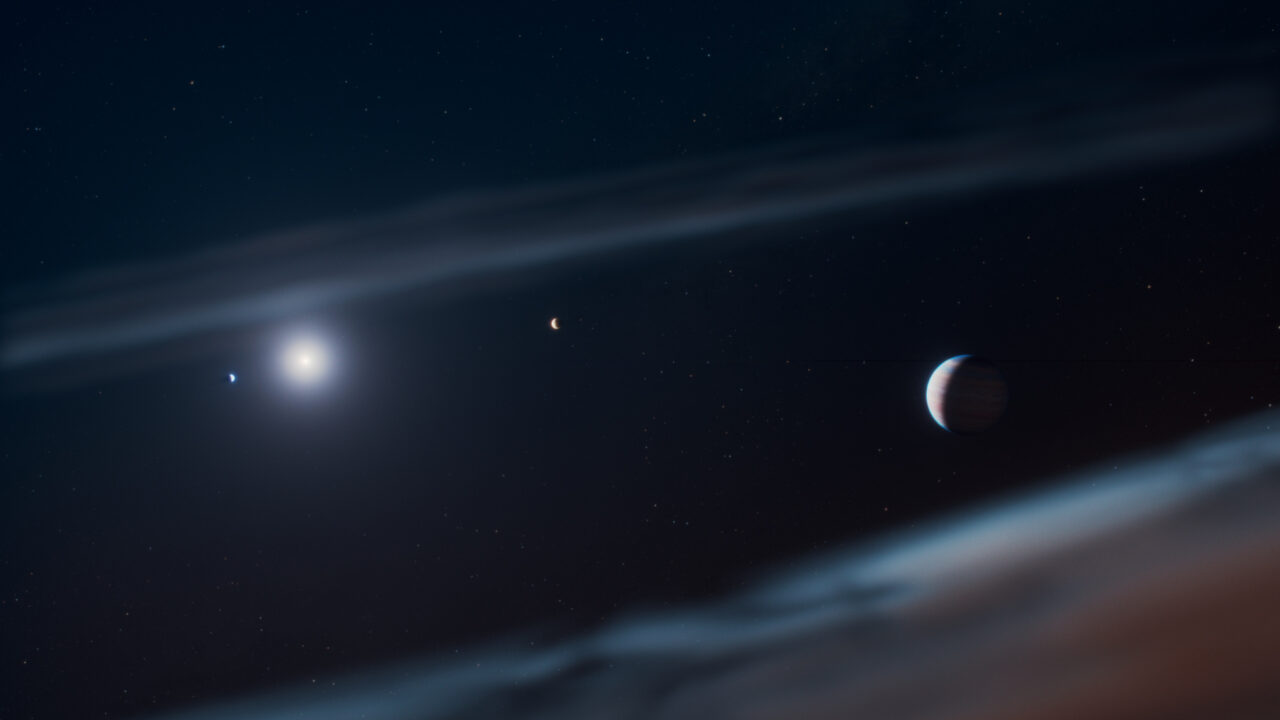
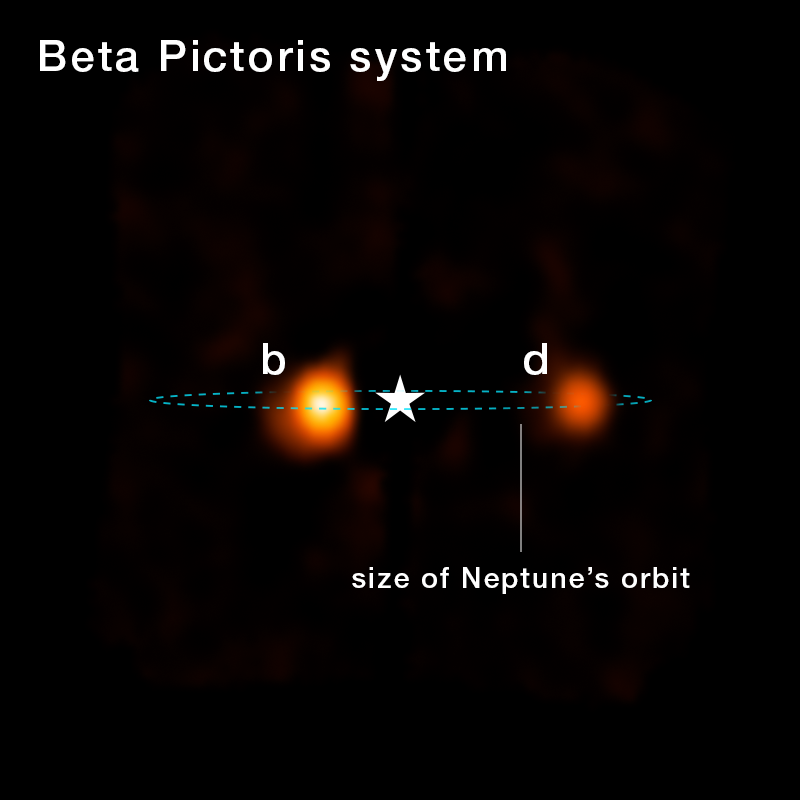
Astronomers have reported the discovery of Beta Pictoris d, the third known planet around the young star Beta Pictoris, located about 63 light-years from Earth. The striking part is how it was found: not as an obvious bright dot in an image, but through a molecular fingerprint in James Webb Space Telescope data.
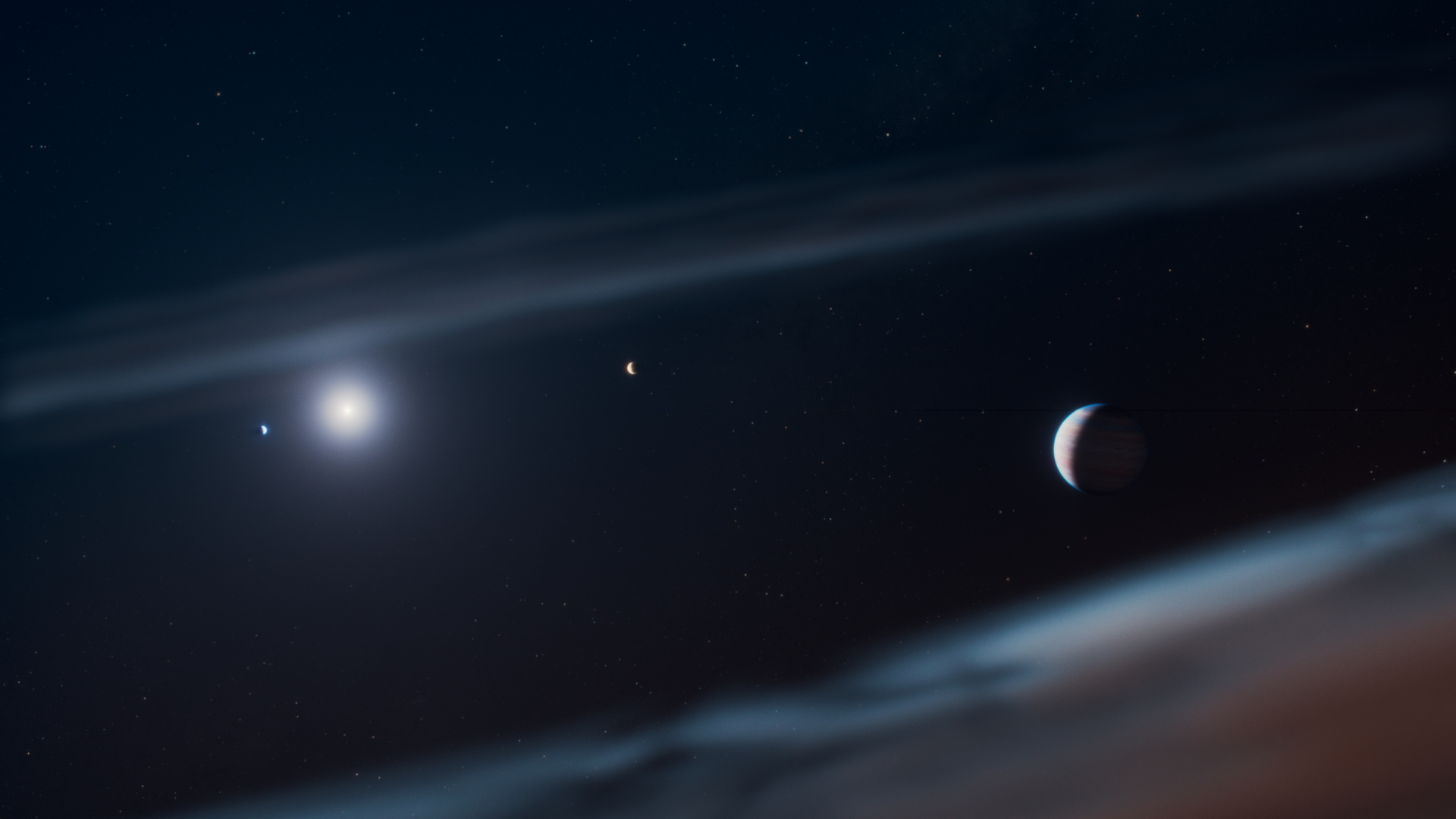
The discovery was described in the July 15, 2026 NASA official release and in the scientific paper by Aidan Gibbs and co-authors. According to the researchers, Beta Pictoris d is now the third directly observed planet in this system, making Beta Pictoris one of the rare systems known to host at least three directly imaged planets.
A planet they were not looking for
The Webb team was initially using NIRSpec to study the atmosphere of the already known planet Beta Pictoris b. Then an unexpected signal appeared: a pattern of peaks and troughs matching carbon monoxide absorption lines. The spectrum allowed researchers to test the object’s motion, position and alignment with the debris disk, helping rule out a background source.
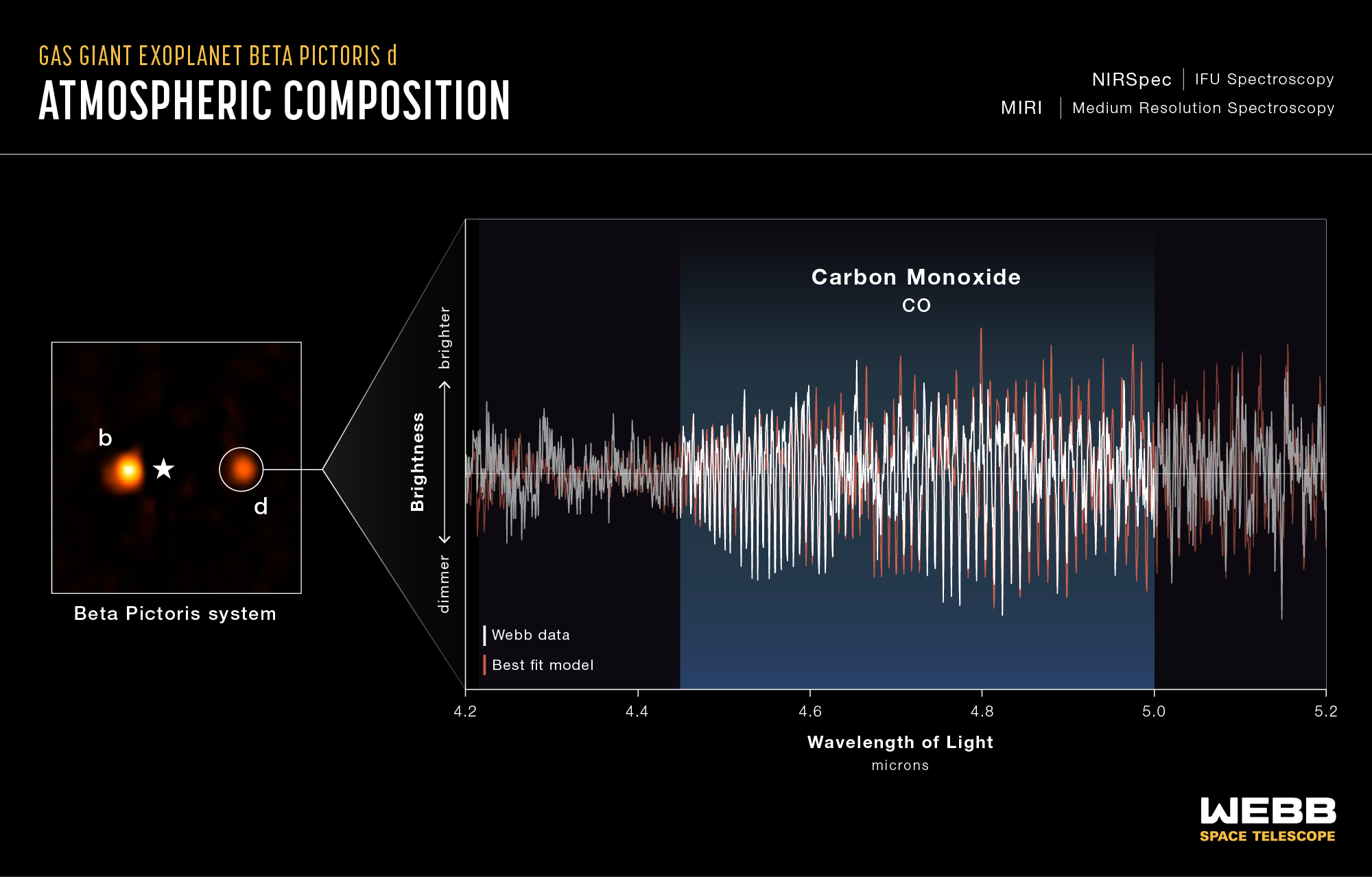
Follow-up Webb observations with MIRI detected signs of water vapor and methane. NASA notes that spectroscopy did more than identify a possible planet: it immediately began revealing the object’s chemistry and motion.
Why it stayed hidden for more than a decade
A second independent team using ESO’s Very Large Telescope and Webb/NIRCam data confirmed the planet through direct imaging. As shown in the ESO archival image series, astronomers later identified Beta Pictoris d in older observations, including archival images more than a decade old.
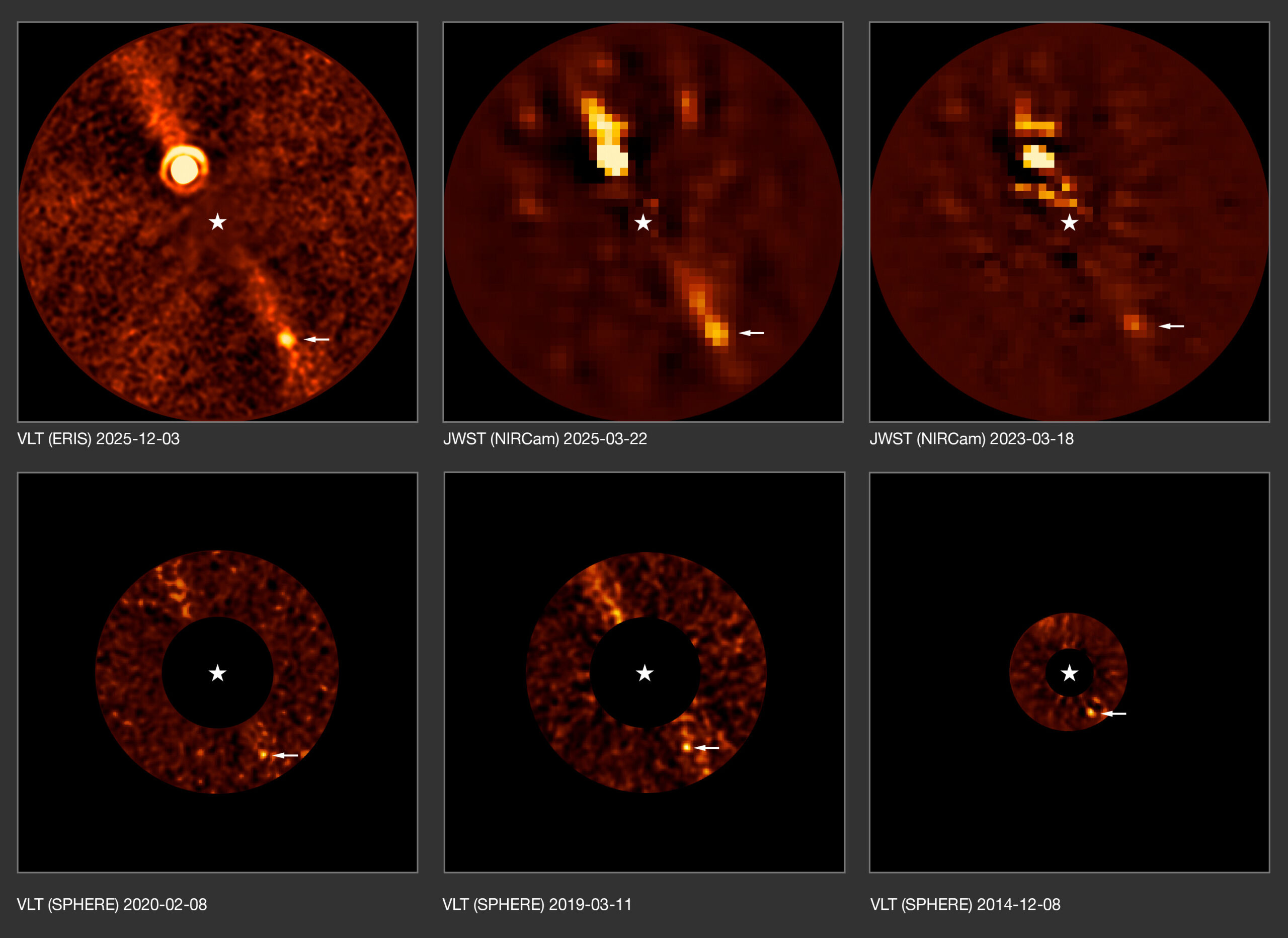
The system’s debris disk acts like cosmic fog, scattering starlight and making faint planets hard to separate from the glare. According to the Smithsonian Magazine overview, Beta Pictoris d is roughly 100 times fainter than Beta Pictoris b and is estimated to orbit the star once every 91 years.
A young laboratory for planet formation
Beta Pictoris is a valuable natural laboratory because the system is still young and surrounded by material left over from planet formation. Cifrum.kz recently covered another Webb observation of an exoplanet atmosphere; this discovery shows another side of Webb’s power — not only studying known worlds, but also finding planets hidden in existing data.
If spectral template matching works across more systems, astronomers may be able to uncover planets too faint or too close to bright backgrounds to stand out in ordinary images. That connects this discovery with broader stories about NASA technology missions and Kazakhstan-NASA space cooperation: progress in space technology often begins with a better way to read the data already in front of us.




Comments on this article