

Hangzhou, China. Researchers from DAMO Academy, Renmin University of China and the University of the Chinese Academy of Sciences have presented ElementsClaw, a system that helped select potential superconductors from millions of crystal structures. Four proposed materials were synthesized and experimentally verified to enter a superconducting state.
The result is described in the group’s research preprint. It is not a peer-reviewed journal article at the time of publication. DAMO calls ElementsClaw the first specialized AI agent of its kind, but that is the developer’s characterization rather than an independently established priority claim.
The four materials verified in the laboratory
| Material | How the candidate emerged | Critical temperature |
|---|---|---|
| Hf21Re25 | Present in a structure database but not previously verified as a superconductor | 2.5 K |
| Zr4VRe7 | Its crystal structure was reinterpreted | 3.5 K |
| HfZrRe4 | A newly generated candidate | 5.9 K |
| Zr3ScRe8 | Proposed through structural-motif reasoning | 6.5 K |
The critical temperature marks the point below which a material becomes superconducting. The highest result, 6.5 K, is about −266.7 °C. The work therefore does not represent room-temperature superconductivity.
How ElementsClaw narrowed the search
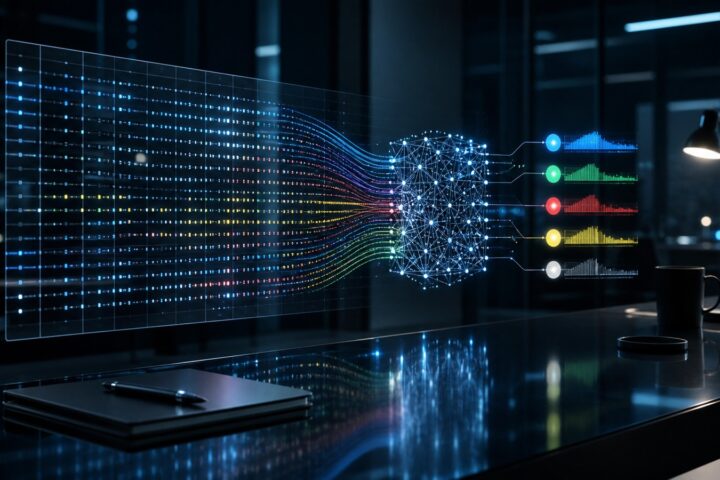
The framework combines the Elements large atomic model with a language model that coordinates computational tools and scientific context. According to the preprint, it processed 2.4 million equilibrium crystal structures, identified about 68,000 high-confidence candidates and completed the initial screening in 28 GPU hours.
Those 68,000 entries are predictions, not 68,000 discovered superconductors. Researchers must still choose viable targets, synthesize samples and carry out physical measurements. Laboratory confirmation is the step that turns a computational candidate into a verified material.
The developers made a materials database available for academic use. South China Morning Post reported, citing DAMO, that the underlying atomic model has about one billion parameters and was trained on a large collection of molecular and crystal structures.
A separate SuperC project found two more compounds
An independent SuperC team combined machine learning, first-principles calculations and experimental synthesis to search for kagome materials. Its peer-reviewed Physical Review Research paper reports YRu3B2 and LuRu3B2, with critical temperatures of 0.81 K and 0.95 K respectively.
That paper was published on 1 April 2026, so it should not be described as a simultaneous July announcement with Alibaba. It does, however, illustrate the same broader shift: machine learning is increasingly acting as a filter between a vast theoretical materials space and expensive laboratory work.
Why the kagome lattice matters
A kagome lattice is built from a repeating pattern of triangles and hexagons. This geometry can shape electron motion and electronic states in unusual ways. The SuperC researchers confirmed bulk superconductivity through magnetization, specific-heat and electrical-transport measurements.
The Aalto University-led consortium has a long-term goal of finding a room-temperature superconductor by 2033. YRu3B2 and LuRu3B2 still require temperatures below one kelvin and do not fulfill that goal.
What AI accelerated — and what remained human work
The main acceleration occurs during candidate selection. An algorithm can rank millions of structures and offer a short list for synthesis. It does not replace materials scientists, who decide what can be made, grow the samples, verify their structure and measure resistance, magnetism and heat capacity.
This hybrid approach parallels other computational advances in science. Cifrum.kz has also examined how IBM Heron modeled a particle-physics process and reviewed emerging technologies shaping research in 2026.
Sources and further reading: the ElementsClaw preprint, the DAMO materials database, the Physical Review Research paper and the Aalto University research record.
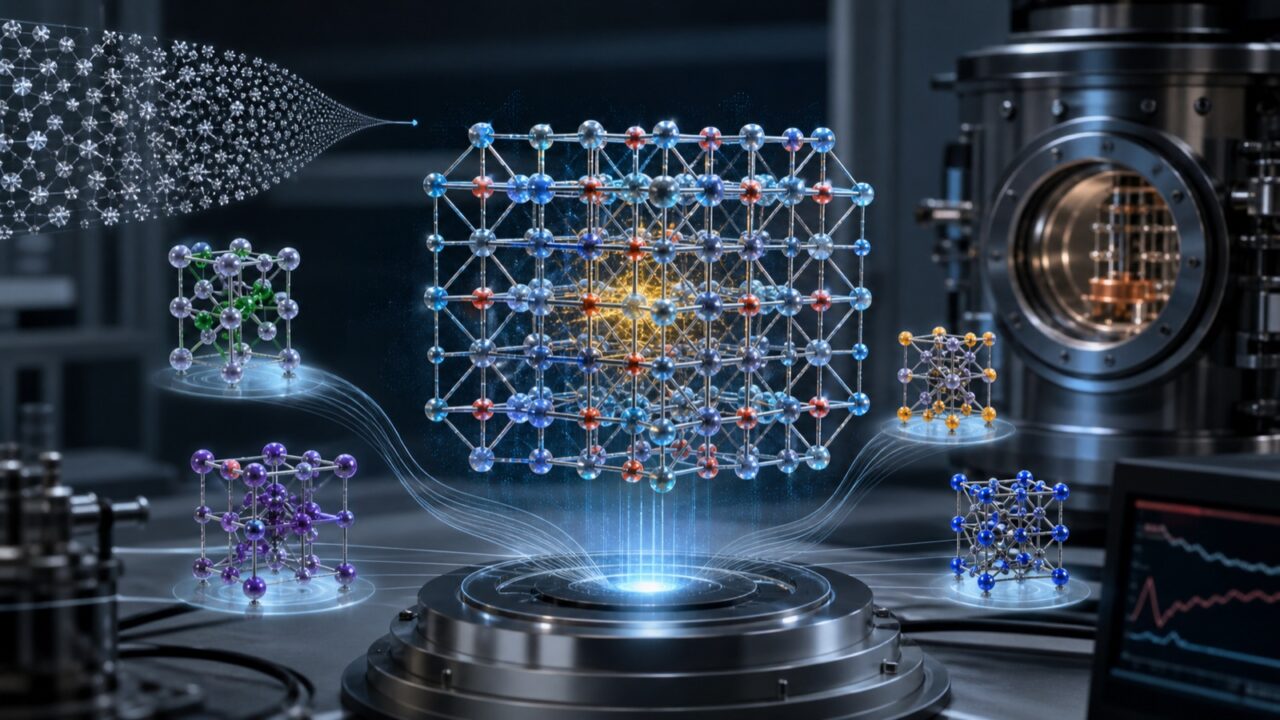
The lead image was created with artificial intelligence for Cifrum.kz as a conceptual editorial illustration. It does not depict the actual samples or a DAMO laboratory.
Comments on this article