


The multiverse: scientific theories and hypothetical worlds
The concept of the multiverse is one of the most exciting and provocative theories in modern physics and cosmology. It goes beyond the traditional understanding of reality, offering a revolutionary view of the structure of the cosmos. The multiverse is a hypothetical model in which many parallel universes exist, each with its own unique physical laws and characteristics. The concept emerged at the intersection of quantum mechanics, relativity theory, and modern cosmological research. Scientists propose various models and interpretations that allow a fresh look at fundamental questions about the origin and structure of the universe.
Quantum mechanics and parallel worlds
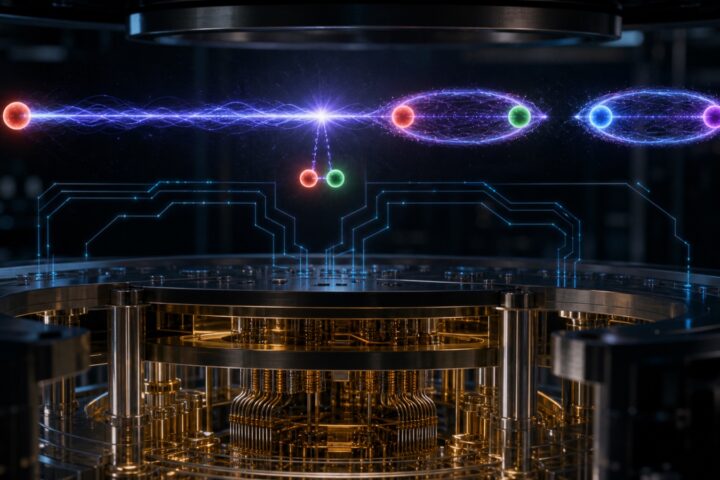
Quantum mechanics provides the first serious scientific grounds for the existence of a multiverse. Heisenberg’s uncertainty principle and Everett’s many-worlds interpretation suggest that every quantum act produces many alternative realities. At the moment of quantum choice the universe branches, creating an infinite number of parallel worlds where every possible outcome is realised.
Cosmological models of the multiverse
Modern cosmology offers several key multiverse models:
| Model | Main characteristic |
|---|---|
| Inflationary theory | Postulates an infinite number of universes arising from cosmic inflation |
| String theory | Describes the possibility of parallel worlds in various dimensions |
| Holographic universe | Treats reality as a projection of a more complex multidimensional structure |
Physical patterns of parallel worlds
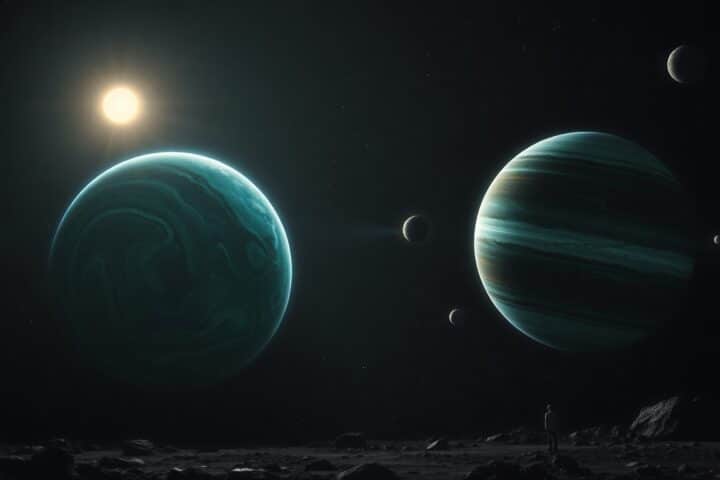
Each hypothetical universe may have its own set of fundamental physical constants. A small change in the strength of gravity or electromagnetic interaction could lead to radically different forms of matter and structures of the cosmos. This opens fascinating prospects for understanding the nature of reality.
Empirical evidence and scientific limits
Despite the theoretical appeal of the multiverse concept, direct empirical evidence does not yet exist. The scientific community continues to develop methods of indirect confirmation through analysis of cosmic background radiation, study of cosmological anomalies, and the development of mathematical models.
Conclusion
The multiverse concept remains one of the most intriguing scientific hypotheses of our time. It expands our understanding of reality, showing that the world may be far more complex and multifaceted than we assumed. Although direct proof is still lacking, theoretical multiverse models open new horizons of scientific knowledge. Further research in quantum physics, cosmology, and theoretical mathematics will help us draw closer to grasping this fascinating concept.
Image by: Mikhail Nilov
https://www.pexels.com/@mikhail-nilov

Comments on this article