


The basics of quantum mechanics
Quantum mechanics is the branch of physics that studies the behaviour of matter at the microscopic level. Unlike classical physics, quantum mechanics shows fundamentally different patterns:
- The probabilistic nature of processes
- Wave–particle duality
- Heisenberg’s uncertainty principle
- Quantum superposition
These principles lay the foundation for understanding the possibility of parallel realities. Scientists have found that elementary particles can be in several states at once, which indirectly indicates the existence of multiple variants of reality.
The many-worlds interpretation of quantum mechanics
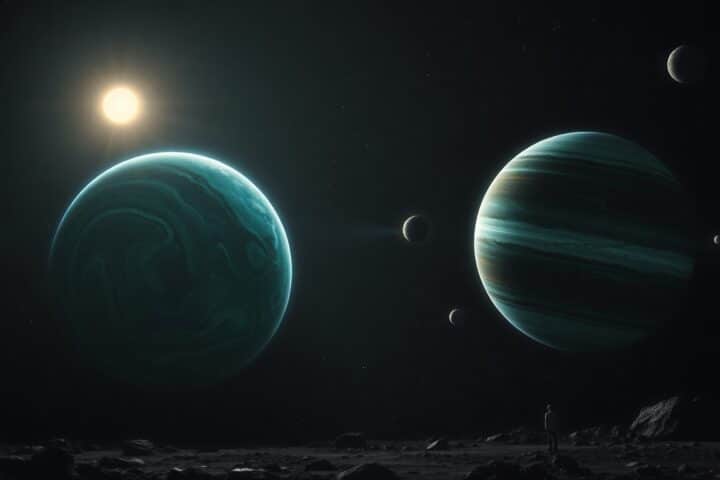
The best-known theory of parallel worlds is the many-worlds interpretation, proposed by physicist Hugh Everett in 1957. According to this hypothesis, every quantum event branches reality into many alternative universes.
| Theory | Core concept | Key researcher |
|---|---|---|
| Many-worlds interpretation | The existence of an infinite number of parallel realities | Hugh Everett |
| String theory | The possibility of 11 dimensions | Brian Greene |
Experimental evidence
Despite the apparent fantasy, scientific experiments exist that indirectly support the hypothesis of parallel realities. For example, the famous diffraction-grating experiment demonstrates that particles can pass through two openings simultaneously, contradicting classical logic.
Modern scientific outlook
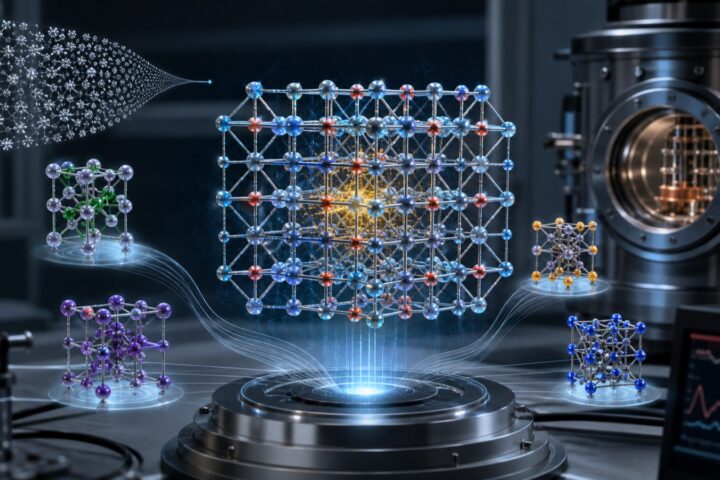
The world’s leading physicists continue research in quantum mechanics. Scientists such as Michio Kaku and Brian Greene are developing theories that expand our understanding of reality. Quantum computers and advanced experiments are gradually bringing us closer to understanding the multi-world nature of the universe.
Conclusion
Quantum mechanics opens incredible prospects for understanding reality. Parallel worlds from the realm of science fiction are becoming a serious scientific hypothesis. Although final proof does not yet exist, scientists continue to investigate this fascinating area of knowledge. Each new discovery brings us closer to understanding the complex and multifaceted nature of the universe, where an infinite number of realities, differing by the smallest quantum fluctuations, may exist.
Image by: Markus Winkler
https://www.pexels.com/@markus-winkler-1430818


Comments on this article